
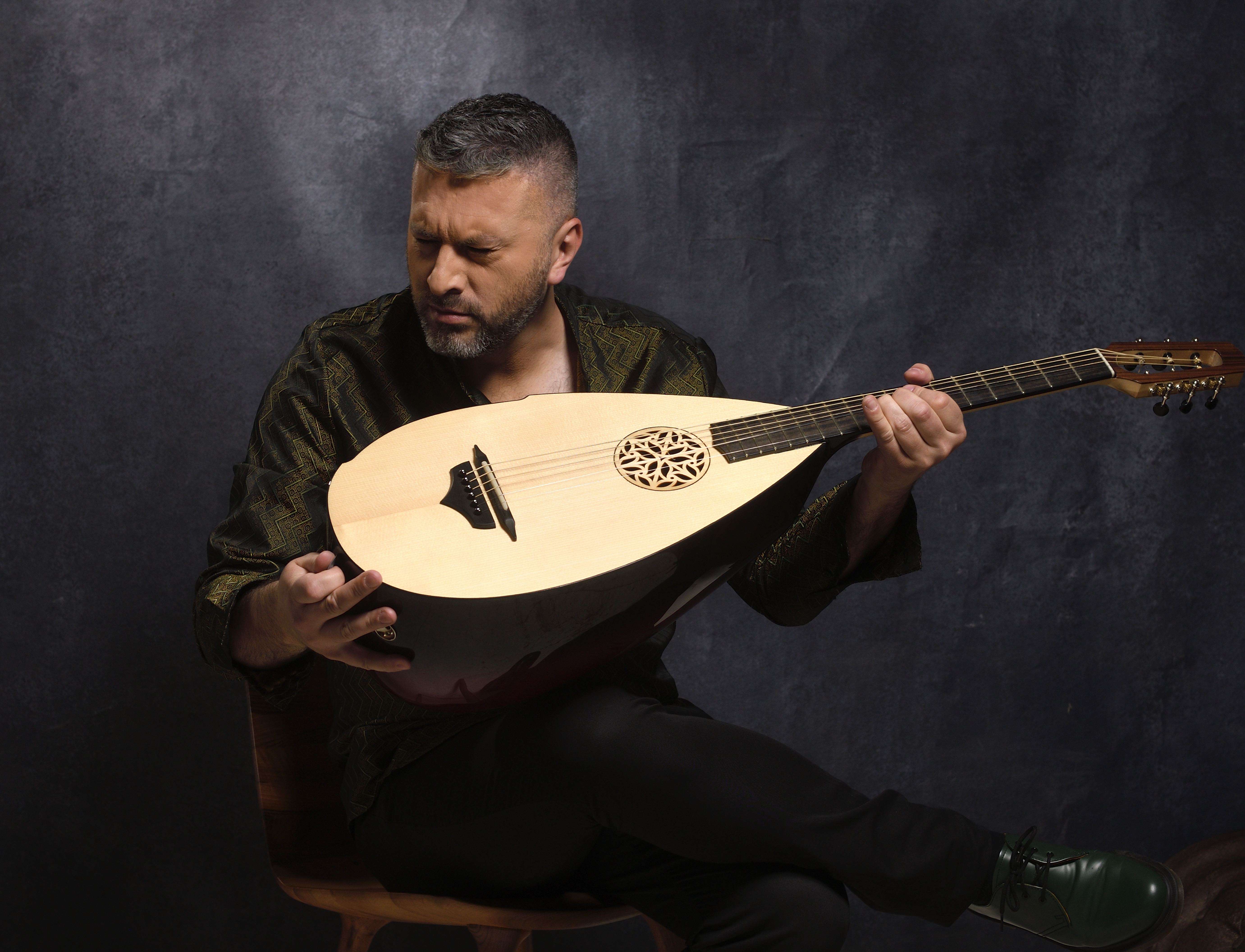
Damir Imamović: «Our obligation is to give something back to tradition, not only take from it»
The Sarajevo artist lives his best professional moment. International recognition, tours throughout Europe, dozens of projects for the coming months: a book, productions… After the resounding success of Singer of Tales (Wrasse Records, 2020), The World And All That It Holds (Smithsonian Folkways Recordings, 2023) has come to light. A fascinating recording that has become a magnificent complement and soundtrack to the latest book (with the same title) by the prestigious writer Aleksandar Hemon, about the relationship between two men of different cultural and ethnic origins, in Sarajevo at the beginning of the 20th century. A kind of symbiosis between the Sephardic and Muslim heritage. We took advantage of our last trip to the capital of Bosnia and Herzegovina, to meet Damirand talk about all this, about personal and creative freedom, about the reality of the country, and many other things. A long conversation full of magical reflections from someone who can already be considered one of the most important creators of contemporary Balkan culture
«I’ve always thought that an artist needs to go ahead and do things regardless of how people see them»
«Sevdalinka is very well connected to Muslim culture, not religion but culture, but has also been influenced by other traditions»
«Old Sarajevo Serbian merchants from the 19th century are more Turks than most Bosniaks today»
By César Campoy.
–First of all, I would like us to talk about how the idea of preparing a soundtrack for The World And All That It Holds, the book by your friend Aleksandar Hemon, came about.
-Well, Sasha Hemon has been writing this book for a long time, for 14–15 years, but he had to stop it in several moments and take it on again. And this time around he was about to finish it just before the pandemic, and he wrote me because he needed help with some songs because he was using a lot sevdalinkas and sephardic tunes. And then we talked about it, and he offered me to do a soundtrack, which I accepted because I really loved it, but you know, I wasn’t even sure that it would be my independent album. I thought it would just be some kind of a soundtrack for the book. But then, around that time, I got an offer from Smithsonian Folkways to do an album for them, and I put those two things together and decided it would be really good if that would become my album as well.
–Without a doubt, the story is a magnificent example of multiculturalism and an anthem to personal freedom, identity and expression: the relationship between two men from different social classes and from different ethnic origins.
-Yes, I mean, it’s always the case in multicultural societies, such as Bosnia, and especially as Bosnia used to be before the First World War, that people come in contact with each other. They trade, they communicate, they argue, they love each other, and I think no one is entering into relationships of any kind with this in mind: «Okay, I’m a Serb, I want to be in love with this Croat», you know, or «I’m a Bosniak Muslim, I want to develop a cooperation with this Serbian girl»… So it’s only in hindsight, in our later understanding, depending on what is important for us, that we assign these identities. But it’s normal that everyday life brings you into contact with all kinds of people. And that through everyday life and relationships, feelings, interests, and needs, we then find ourselves with people that we don’t instantly understand, but we need to cross some borders in order to understand them and to feel them better. And so from that point of view, I can say that this, Sasha‘s book, is a book about two guys falling in love in circumstances that are really not very attuned to that, you know? In the trenches of the First World War, in the time when homosexuality was completely alien and foreign to the majority of the population, in the time when it was a war, it was not a perfect time for love, and plus, they were Sarajevans. And this identity of Bosnia, of Sarajevo especially, was strong enough to connect them. And they felt Sarajevo to be their own home, regardless of their individual ethnic or religious identities, who is a Muslim, who is a Jew, or whatever. They were Sarajevans. And I think that’s also important for Sasha. He is a big Sarajevan, and he usually says that he has two places that are forever inscribed in his heart. One is Sarajevo, and another is Chicago. And he has the same feelings toward both cities. He feels them as home, and he carries them wherever he goes. And so, of course, from the standpoint of political theory, cultural studies, and theory in general, you can say that there’s a lot of multiculturalism, but I think art is important because it approaches life not from the standpoint of theory and big ideas but from everyday life in which people love each other, hate each other, argue, trade, and that’s what’s really important about this book. He’s not preaching; he’s not taking sides and blaming anyone.
–How did you choose the repertoire? How was that work that combines original songs, traditional pieces of the Sevdah tradition and songs of Sephardic origin?
-Well, usually in my projects, it starts from me, what I feel like singing, what I have ideas for in terms of arrangements or if I write a new song, or something like that. But this time around, it started as a theatre project or a film project. It started from an author. If you are a musician working for a theatre or film, you follow the lead of a director. So in this case, we started this project with Sasha being a director giving me some material to play with. And then I started adding my own, talking to him; and we ended up with songs that are a combination of his original ideas and my own ideas, and also my own writing that just came out of this process. So it was a mishmash. Some songs I was strongly against because I just didn’t know how to sing them, but with some of them I managed to find my way how to do it.
–This relationship between two men of different origins also finds its symbolism in the fact that Sephardic music has influenced Sevdah so much. How has the Sephardic tradition marked the culture and music of Bosnia and Herzegovina?
-I think we are still waiting for good studies of those influences. How exactly did it influence? We know that we have some common melodies, some common themes, some people were living together, singing with each other, and from the first recordings, from the beginning of the 20th century, we know that Sephardic tunes were also sung by Muslim girls, Sephardic girls were also singing Sevdah tunes and Starogradske, or more popular tunes. So it wasn’t that strict as having only Jewish girls singing Jewish women’s songs, Jewish men singing Jewish men’s songs, and then Muslim women singing only Muslim women’s songs, you know, because it was actually a mishmash from what we see from the first recordings in Sarajevo in 1907–1908 and these famous Gramophone recordings. And that being said, I think what we can also learn from there is that we often forget that we were all part of this big empire. The public culture of the Ottoman Empire influenced not only Muslims and religious Muslim communities, but also it influenced other communities, national smaller communities of Jewish people, Roma, Serbs, Hungarians, Romanians, Albanians, everyone… and so this long influence is today not only in Sevdah, so-called Muslim songs, but also in Jewish songs. If you listen to old Jewish repertoire, you will often recognize some old maqams from Turkish times. And so sometimes even Jewish community preserve those Ottoman influences better than Muslim community.
–What’s the reason?
-We can speculate now. Not all of them were rich, and in merchant business, but some of them, some families were really rich, and they were trading, they were going to Thessaloniki, to Istanbul, coming back, bringing songs, and I think that in this whole process, a lot of interesting songs were created and changed, and I think it’s our obsession with nationalism, with national and ethnic identity that sometimes makes it hard for us to see how these processes develop because we always think that the Jewish community of Sarajevo in the 17th century is the same Jewish community as in Sarajevo in the 20th century, Muslim community as well, Orthodox or Serbian… So if people change, cultural influences change. Old Sarajevo Serbian merchants from the 19th century are more Turks than most Bosniaks today in terms of how they dress, how they speak, their value system, and everything else. So these things are usually very complicated, and we try to simplify them, and one of the ways of simplifying that is this ethnic nationalism, when we think that things had only one meaning for one community, and in that meaning they influenced other communities. I don’t think that’s the case. I personally have no problems with this indecisiveness of cultural influences, because maybe it influenced, maybe not, maybe both of these traditions got influenced by something else, etc. etc. So these networks of influences never stop.
–About this, there are some Sevdah songs that are influenced by Sephardic tunes. For example, as you know, Koliko je širom svijeta has its origin in the piece Yo m’enamorí d’un aire. But, sometimes, it is not easy to find the connection between one and the other.
-Well, I think we need to dig deeper because the versions we have today of some famous tunes have actually quite changed with time. For example, that’s why it was important for me on this album to sing Nočes, nočes not in the version sung by Flory Jagoda and many modern performers. I always felt this melody to be nice, and the lyrics are wonderful, of course, but in terms of melody, I always felt, as a musician, that it’s somehow not decisive, that it’s not concrete. I always had it as some kind of premonition in my mind, like some kind of intuition: there’s something wrong in this. And then I found Eliezer Abinun‘s recording from 1962. He was a Hazzan of the Jewish community in London. And he was born in Sarajevo, and he lived in Sarajevo until he was, maybe, 17 or 18, and then they escaped for London just before the Second World War in the 30s, and he recorded for Deutsche Grammophon in 1962 an a cappella singing of his own of old Sephardic tunes, and his version of Nočes, nočes is completely different from what Flory Jagoda sings. His version is based on Ottoman Maqam, Hijaz Humayun, and when you listen to this melody, you realize: «Ah, okay, this is why it’s so connected with many Sevdah songs». It’s developed in a different way; it’s much more strict and even virtuosic in terms of singing. But also, for example, with some tunes, like the famous Bentbaša song Kad ja pođoh na Bembašu. Yes, there are two versions in the Jewish community. One is a religious ceremony song. Another one is a secular tune, Sephardic romantic song. And in the Bosniak Muslim community, there are two versions. One is an older melody; one is the one with this melody we are referring to. But actually both versions can be traced to Hürriyet Marşı by Rifat Ali from the 19th century, as Risto Pekka Pennanen showed, because obviously that’s how music developed. That people would hear a nice tune, and if it’s a nice enough tune, it will stick with you, it will stay in your ear, and it will co-form your musical thinking. So maybe in a couple of months you’ll start singing something else to this melody without even realizing you’re singing that melody. So I think these influences, the fact that we have some people claiming at the beginning of the 20th century that these two songs are similar or the same, doesn’t mean that they were referring to the versions we are singing today. Because within 30, 40 years, songs change completely, especially before the time of radio.
–You once told me that you had a kind of respect for singing in Judeo-Spanish. Here you include Anderleto, Madre mija si mi muero, Nočes, nočes… Did you have doubts about the pronunciation? Judeo-Spanish and Spanish today are different… Have you definitely lost that respect, that fear?
-Well, respect, no, but fear, yes. I didn’t lose respect, but I lost the fear because, I remember, maybe I told you, when I was in Mexico in 2018, I was singing one Sephardic tune, Adio Kerida, and one old woman told me: «Young man, you’re a good singer, but your Spanish sucks, you should work on your Spanish». And then I had to explain to her that this is 15th century Spanish, sung by Bosnians, who tried to preserve their identity. Bosnian Sephardic Jews, who tried to remember their identity through this. But I think I lost fear when I heard the field recordings of Ankica Petrović, famous UCLA and Sarajevo professor of ethnomusicology. She used to interview a lot of Ladino speakers and singers in the, I think, end of the 70s and beginning of the 80s in the communities in Sarajevo and Belgrade.
–Interesting…
-Yes. She gave me those recordings, and, when I was listening to the interviews and to them singing the tunes and pronouncing the words, they also did it with heavy Sarajevan accents. You know, they’re not trying to convey particular sounds. They speak like Sarajevans with a heavy Sarajevo accent. So that gave me a kind of confidence to say: «Okay, I can do this». Because I would feel fake if I would be imitating Spanish or, I don’t know, Mexican or some Latin American accents or Spanish contemporary accents in trying to convey something that’s a 15th century Spanish plus preserved in Bosnian Sephardic community for hundreds of years, and of course it got changed. And in many communities, like the Roma community, the Czech and Polish communities that we have in Bosnia that came here during the time of the Austrian Empire, and the Jewish community as well, if they don’t have a word for something, they use a Bosnian word.
–The album opens with one of your own compositions, Sinoć, a slap of bestial sensations and emotions. Ivana, for example, breaks all the canons of human logic with a violin that hurts the listener. There is also inspiration in Musa Ćazim Ćatić, one of the most important literary sources of Sevdah. Were you clear that you had to open this work with this impressive creation to leave the public waiting for more?
-Well, no. I wanted to open it with Kad ja pođem draga, because it starts with the lyrics: «When I leave Sarajevo, my dear, etc.». So for me, conceptually, it was a great fit with the novel. But then my producer, Joe Boyd, and Andrea Goertler, we spoke a lot about the order of tracklist, what would be the order of tunes, and we tried so many other things, and then Joe tried to explain to me how important it would be to catch people at the first listen. And he thought that the best song for that would be Sinoć. I struggled with that for a couple of months; we were talking back and forth while we were mixing, while we were working on a cover… But, if you invite producers to work with you, that’s the role of the producer: to communicate with them, to exchange ideas, and to try to do something that you wouldn’t do by yourself. And at the end, I’m glad that the record starts that way.
–But I think it’s a very very good idea to start with this song. It’s very impressive at the beginning. After that, you have different feelings and emotions.
-Thanks, and it’s interesting that… Have you seen that American folk group? They made a choreography for that song.
–Of course!
-Dancing. And it was, for me, so unexpected, because you would expect other songs like Bejturan, other maybe a bit upbeat songs, upbeat songs to dance to, but this one was really an odd choice. But I loved it.
–Nice people. In Bejturan, you work again with Omer Ombašić. After the good experience with O bosanske gore snježne (Singer of Tales, Wrasse Records, 2021), were you clear that you wanted to collaborate with him again?
-This lyrics he gave me a long time ago. I had it for some time and I knew it, and I was singing it to traditional Poravna melody [it is called «Poravna pjesma» or «flat song», the most natural way of singing the traditional melody, without a fixed rhytmical]. And Sasha is using in the book the story about the famous Bosnian epic hero Alija Đerzelez: he was given his enormous strength by the fairy whose child he saved. And Omer mentions Alija in this lyrics. So for me, when Sasha mentioned this, I instantly remembered this tune by Omer. And I sent it to Sasha, and he loved it because it really sounds like it was written in the 17th century. Omer conveyed this traditional style so well. And then when we were starting rehearsals for this, I was jamming with the band, and I was because I recorded several versions of Poravna tunes, like Gdje si dragi, živa željo moja, which I recorded twice. And I recorded other tunes, so I know her very well. Poravna song is a crew of the Sevdalinka repertoire. It’s usually referred to as the most authentic, so to speak, way of doing Sevdalinka. And I think it’s nice to have something like that in one genre. Some crew of the repertoire that can help you build your own artistry. And then try to do something new with that. And in this version, I definitely wanted to change the groove to this melody, and all these things came together, and I’m really glad that we recorded it.
–We were talking before about the tremendous symbolism of this album, brimming with sensitivity and with an overwhelming emotional charge for you, considering that your father passed away while you were working on it. In addition, Harmoniko is a song in memory of the unrepeatable Farah Tahirbegović. To what extent has this work meant for you, as a kind of exorcism healer, to pay off debts?
-Yes, of course, my dad died at the end of 2020 because Corona, and I was so struck by it. It took me months to get my act together. At that time, I was already preparing for an album. I was writing some songs… I think this idea of an album with Sasha was still not finished. It was still in some preparation phases. It definitely struck me and changed many things in my life, emotional and otherwise. But the song that you’re referring to with Farah is maybe, I don’t know, that’s how I process grief. But it takes a long time. Sometimes when you’re overwhelmed with emotion, and that can last not only a couple of weeks or months but even years after some, when somebody close to you dies… I’ve been writing this song forFarah for like 10 years. It was so hard for me because when you are overwhelmed with emotions, you can usually write bullshit and kitschy stuff and maybe too shallow things that are emotional because you’re emotional, but material is not emotional because you don’t have boundaries, you don’t have… you’re not objective, you’re not realistic, you’re working out of your grief, and… it somehow clouds your artistic judgment. It’s normal. And that’s why I was writing this song for so long, because I was always afraid I was going to write some bullshit just because I was so overwhelmed with emotions. But I decided to put it on this record because also Hemon‘s writing, was a big part of my and Farah‘s friendship. Because one of the first books we were recommending to each other to read were Sasha‘s first short stories that appeared in Sarajevo in translation in the 1990s, I think. And with my father… I really cannot answer the question of how did it influenced this particular album or the work on it. Working again after the pandemic was an escape from this horrible time, not traveling, not working, getting lazy and fat on the couch, you know, and waiting for things to happen and being completely helpless like the whole world was. And so I cannot answer that question. Maybe in 10 years I will be able to cope with it artistically and maybe write something. But, you know, from the death of Farah, I learned a really important lesson, and that is not to wait until somebody dies to pay them a tribute.
–I didn’t know Farah, but I think she was a very, very special woman…
-Yeah, she was. At the same time, she was an activist, a book publisher, and a cultural entrepreneur in the best sense, because she was so in tune with the cultural life of this city, of this country, and of this whole region. She knew who did what where, and she was so great at connecting people and trying to understand the meaning of things, not only for this moment but for the history of this region. And she was so fun and funny. Fun and funny in a really nice way. She influenced so many people, especially in changing the format in which we understand our cultural heritage. For me, she was the big Farah; she was older than me. And now, only now, I can see how young did she died. She could have achieved so many great things.
–Were you clear, from the beginning, that only Mustafa Šantić, one of the best accordionists and clarinetists of the last decades, could express the whole feeling of Harmoniko?
-Yes. There was also a lot of emotional investment there. Mujo was Farah‘s favorite accordionist. And she used to drag me when Mostar Sevdah Reunion would play in Sarajevo, and they didn’t play much in Sarajevo, just in a couple of places. She would bring me every time to listen to Mujo; not to Mostar Sevdah Reunion, but to Mujo individually. Because she really loved his playing and singing as well. And then, when I was about to record this song, and remembered that she also played harmonika, accordion, when she was a kid, I definitely knew that it had to be with Mujo. And it’s also my first recording with harmonika, with accordion in this Radio Sarajevo style, so I wanted to have the best man with me.
–Your adaptation of ‘Kad ja pođem draga’ is the most modern sounding song, in terms of instrumentation. How did you establish the parameters to make some songs follow a more traditional path and others more updated?
-I don’t do that consciously. Well, I know what I did; I just reharmonized it. Wherever it was a major chord, I would put a parallel minor chord, just to see what happened. Because there are two types of harmonization in Balkan music. One is following this saz tradition and harmonizing everything around the major root of the melody that got transferred to the Bosnian school, the Bosnian-Serbian early school of harmonization on accordion, done by people like Šerbo [Ismet Alajbegović], like other older accordionists. And there’s this newer version that’s more pop and that’s more connected to Macedonia. They were harmonizing it from the minor root of the scale. I started playing with that, showing it to people in workshops, trying to see how the melody behaves if you harmonize it this way or that way. And I saw that this experiment turned out to be really good for this song. And I like it that way because I never wanted my albums to be in just one color, to use the same way of arranging, harmonizing, playing, etc. in all the songs.
–What’s the objective that you propose when you prepare an album?
-I always wanted an album to be like the travel to have some songs that are more dark and gloomy, some others are more fun, some others are more virtuosic or faster… So I love this mixture. I think that’s really interesting, and I think, and my producers, I worked with a lot of them, also told me that they can recognize one common feeling or stream in my work regardless of what I do, and I guess that’s a personal expression, and that’s great.
–Definitely!
-When I work on a CD, I try to cover it from many angles. I don’t have a particular reason why this one is this way or that way; it’s just intuition. But maybe the reason why, for example, my producers tried to persuade me not to put Kad ja pođem draga first was exactly because it’s a too modern thing. And sometimes people abroad, when they hear something from a particular country, want something that they didn’t hear; they want something traditional or what they call authentic; they want something strange because if they hear something that resembles a pop tune, they’re like: «Oh my god, this is some pop music from that country; I’m not interested in that». Many people have problems like that. I just recently saw, for the second time, this wonderful documentary about Camarón [Camarón, Alexis Morante, 2018]. What happened to him when he tried, after singing with Paco de Lucía for numerous albums, to do the pop rock album.
–La leyenda del tiempo…
-Yes, yes. Even though it’s a brilliant record, he’s singing and everything is great, but he got so much shit for that. In Spain, but also abroad. People just didn’t understand. But he has the right to do whatever the fuck he wants. He was a genius. So I’ve always thought that an artist needs to go ahead and do things regardless of how people see them. Because that’s your prerogative as an artist to do these things and try them out. Yeah, sometimes maybe you’ll make a bad record trying to do it, but who cares?
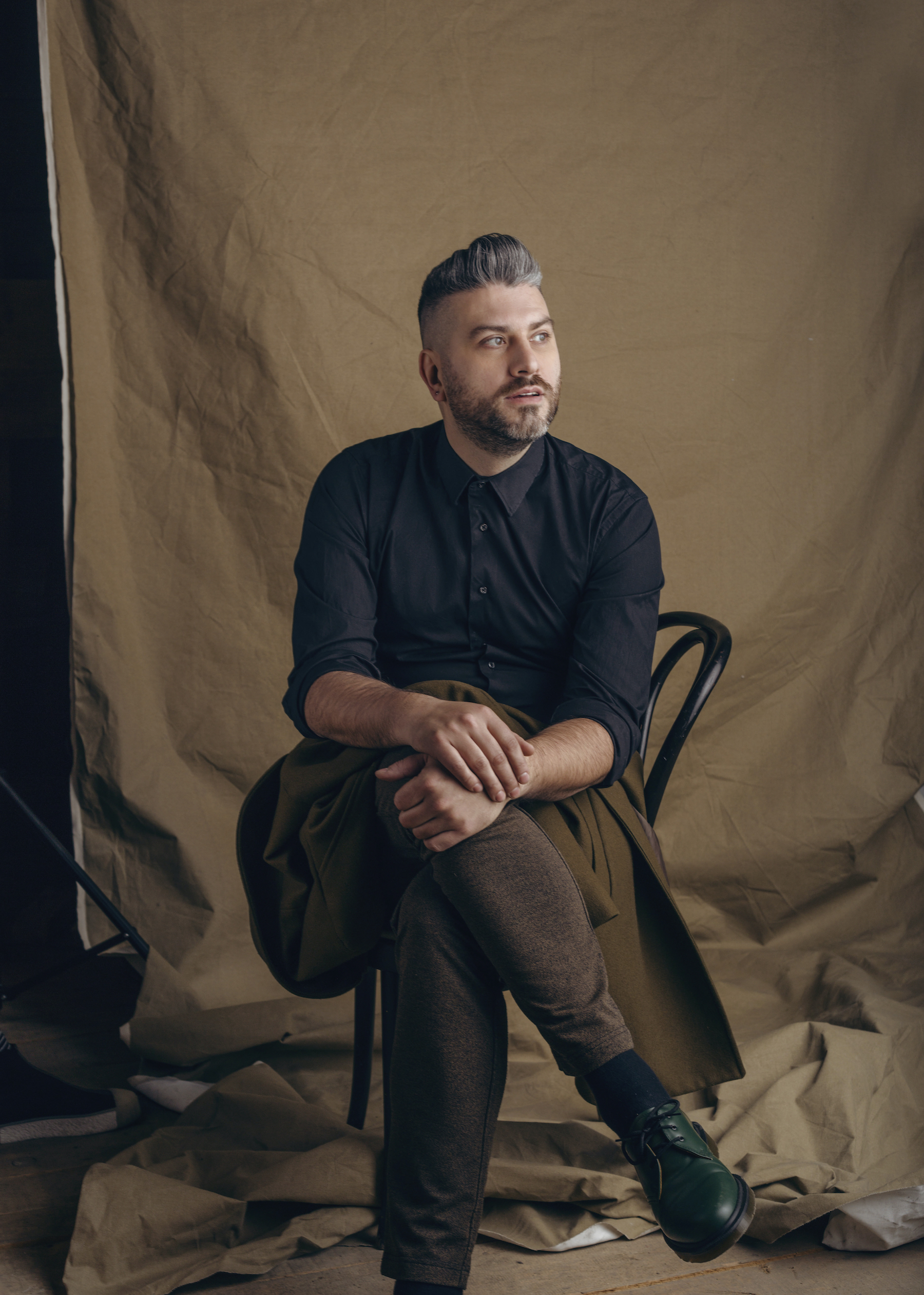
–Yes. I have always thought that 10 or even 20 years must pass before you can objectively analyze what an album can represent in the history of music. This episode was very hard for Camarón. People disowned him and said that he had gone crazy. Today, that album is considered a capital work, not only in the history of flamenco, but also of pop, rock, the mixture of styles...
-Of course. And I think that, in cultural matters, especially music, people are so obsessed with listening to only something they already know. Because that’s how they are taught, that’s what they are used to: listening to particular kinds of arrangements, particular kinds of songs, etc. But for me, I think boredom is one of the most powerful artistic powers. Boredom is really important, and we should let boredom come in and encourage that. When I started playing in solo concerts, I remember I used to have older people come to me. Some of them hated that because they only recognized the old style, but some others didn’t. They would come to me, and I always had a mixed audience. Young people, middle-aged people, older people, and I think I managed to survive in music to be able to live from my gigs for the last 16–17 years since 2005 because I managed to attract different kinds of audiences. It’s not only young people, it’s not only traditional older audiences, it’s not only Sevdah lovers, it’s not only jazz or rock and roll or artistic music lovers…
–But bits pieces of all the audiences…
-Yes. I remember when I started first arranging, like Poravna songs in some other rhythms or maybe changing the famous intermezzo that will always go to traditional tunes, I would have some older musician coming to me: «Oh my god, thank god, man. I was so sick and tired of this old melody». For example, in ‘Bejturan’ when I change the beat, the accent, it became more like a Pakistani or Indian or Asian kind of beat, and it still felt traditional. I think these things just come out of boredom because you are so encircled by this tradition. You’ve heard these versions so many times that you’ve become bored with them. And that also signifies that you have accumulated so much knowledge and so much routine in performing those traditional things that you have a solid ground to build on. So if I change the beat, I still know how to behave as a Sevdah singer on this new beat. I worked with some older singers or musicians who were not able to do that. They were only able to do traditional tunes in traditional format. If you change an accent here and there or just one chord here and there, they’re completely lost. And I think it’s all part of the process of us growing up as a culture of musicians. Sevdah musicians, trying to be more sophisticated, more emotional, more interesting, more open to new ideas. But when I say new ideas, it doesn’t mean only ideas from the modernization processes from the western world from jazz classical music, electronic music, and stuff, but also some old ideas that we forgot but that we can still make use of. Usually people when they say new ideas, they think: «Oh my god, there’s this Grammy-winning saxophone player; let’s steal a groove from him». No. That’s shallow. I think like, can I take a melody that was sung in 1923 and make it interesting today and try to do something with it? Because I’m taking it from before the time of this huge codification of this music that happened in the radio culture in the 50s, 60s, and 70s. And I still think this is my 8th CD, and this whole process, I’m still not tired of it. I still want to do more, I still want to try something new with it. Sometimes it’s new for us, Sevdah lovers, but maybe it’s not new for some people who play jazz in America. But I don’t care about that because I cannot have all the positions. I can only have my position. And it’s up to any artist to have his or her position, the point from which you see the world, but to really see the world and not limit yourself to only your tradition. There are so many beautiful things you can learn from all the different players and musicians and artists in the world, and I don’t see why we wouldn’t do that.
–The book of Hemon is tremendously complex. In it, there are various scenarios, both physical and temporal, and various stories and themes. One of them is that of migrations, which also has a magnificent and classic song in your soundtrack, Koliko je širom svijeta. A migration that, in Bosnia and Herzegovina, is causing a wound with the departure of many young people. How is this exodus affecting, and how will it affect the future of the country?
-Places like Bosnia were always described, for example by economists, as a passive land. Places where bigger economic, political, and cultural forces and powers, empires, and nation states draw their working force from. It’s always been like that. The Ottoman Turks were using Bosniaks for war. They were safeguarding the border against Europe. The Austrians were using Bosnians as a part of their Orientalist colonization project because they never had colonies. Bosnia was their own colony, apart from what they tried to do in Mexico. And later on, maybe only in the time of socialist Yugoslavia, for one period, we were developing as an indigenous culture that was counting on people staying here and producing their meaning of life here. But even then, at the end of the 1960s, people started going to Germany to work for economic reasons. And that’s why people remember these times at the end of the 70s and 80s as the golden age of Sarajevo and former Yugoslavia in general, because that was the time when people didn’t dream of going to live and make their livelihood in Germany, Sweden, America, Canada, Australia, or wherever, but they were working, educating themselves, and taking part in social processes because they wanted to stay here and work here. But unfortunately, now with the war, with the ethnic division of the country, and with this horrible political situation we’ve been living in for 30 years of constant insecurities in terms of the very existence of the state or society and all the institutions, we somehow went back to this old mentality that in order for you to succeed in life, you have to leave Bosnia. So it’s not only factual people leaving due to genocide, ethnic cleansing, a lot of refugees throughout the world, and after the war, economic immigration because people couldn’t make their livelihood here in Bosnia, but they had to escape and work somewhere else. Bosnia has some kind of national attitude, mentality, or whatever it is called, discourse that’s prevailing here. Still, people think that you’re not successful in life if you don’t leave Bosnia and get yourself a German or US or Canadian or Swedish passport. That’s the convention. And if you stayed in Bosnia, there’s something wrong with you.
–You become a kind of failed person…
-You’re stupid or you’re not successful, and stuff like that. But I’m trying to see a good side of this process. I’m trying to see how Bosnian identity, Sarajevo identity, Tuzla identity, Mostar identity, all the identities we have here, have to be co-formed and taking into account not only us living here but also Bosnians living throughout the world. And they are still part of the community. I mean, we are now talking in this cafe, and I see people here who are living in London, in the States, and they are here for the Bookstan Festival, and they are Sarajevans; they, like Sasha Hammon, bring their Sarajevo-ness or Bosnian-ness somewhere else, but they are constantly communication with Sarajevo and Bosnia. And I think that in this communication, many beautiful things happen. I mean, even this very novel that Sasha wrote is his communication with Sarajevo and Bosnia that’s still going on even though he’s been living in the States for 30 years and he’s doing a lot of projects that are completely unrelated to Bosnia. He was writing the third season for Sense8, famous network TV show, but the third season never came out. Then he was co-writing The Matrix Resurrections, and so he was working on completely unrelated things. But I learned from him that these connections should be preserved not only in nostalgic memories like: «Oh, before the war, we had great times!». Because we are always nostalgic for the old times. I even hear today people who are my age they’re nostalgic for the late 90s and early 2000s, even though at that time we thought that we were living in the worst possible time in Sarajevo ever. But now we are able to see some good sides and good things from that period. Whenever we look at the future, we have to take two steps back. I think the constant communications with not only Bosnians throughout the world, but all the different cultures throughout the world can help us understand that. It’s somehow giving up on this provincial attitude that we are most important in the world, and if we are not successful as a big city or big country, we are a failure. We’re not. I don’t think this cultural process should be built without taking into consideration all the different people who want to take part in this Bosnian identity, regardless of where they live. Some of the most important books in history, anthropology, and political science were written by Bosnians in institutions and universities in Australia, Canada, America, Sweden, Germany, Switzerland, Finland, and they still take part in this process. I think that we shouldn’t see that as a reason to be sad or melancholic, but we should just see that as a great thing. Because when would the American University be interested in topics from Bosnia if there weren’t some Bosnians there to talk about it? I’m trying to see positive things out of really horrible historical circumstances.
–The classic Snijeg pade also appears on the record. It has become a symbol of freedom in Bosnia and Herzegovina after you performed it at the Sarajevo Pride March in 2019. Do you think that some conservative or traditional sectors may think that there has been some kind of sacrilege by giving this song a new dimension?
-Well, no, because Sevdah is secular music. It had a strong connection with Muslim religious music on so many levels in sound, in the co-forming of melodic lines, and stuff like that, but it was not the only influence. A lot of these things were basically secular influences. So, do you know where this attitude comes from? During socialism, religious music of any religious group was not a huge thing, and religious institutions like Islamska Zajednica, Pravoslavna Crkva, and all the other churches were somehow outside of the mainstream of society. That was the time when the most important things happened in the culture here. We were liberated enough from these conservative influences to be able to educate ourselves, to completely change the situation in our society, to have girls educated as well, and to have economic, educational, health, and all the other levels raised probably more than ever in the history of this region. And then, the only way for, for example, Muslims to recognize their presence in public media was through sevdalinkas. So when Zaim[Imamović] would sing some tune and mention Allah in it, and Muslim names like Mujo, Fata, and stuff, people were surprised because they didn’t have religious music that was present in public life. I mean, Socialist Radio also had radio shows dedicated to Bajram, to Christmas, to ethnomusicology programs… It’s not true that it didn’t exist. But just because it was socialism, which is basically a secular constitution of society, it was not mainstream. But the only thing in mainstream from this Muslim culture were Sevdah tunes. So when socialism broke down and Yugoslavia dissipated, and war started, a lot of people kind of kept this attitude towards sevdalinka. It was important for them to be present, even though today they are free to have all the religious music ceremonies and stuff like that. I feel that it is my role to remind people that it’s a secular tradition, not a religious one. Of course, it’s very well connected to Muslim culture, not religion but culture, but sevdalinka has also been influenced by other traditions.
–And, what about those possible problems with the most conservative sectors?
-Whatever you do, somebody will come up and say: «»That’s not right, that shouldn’t be done that way». But what can you say? The problem with conservatism is that, for a long time, it hasn’t been producing any value. I mean, name me one important writer, one important musician, that moved things around in the last 50 years, and that was a complete conservative. You actually don’t have them. It’s only that we forgot that Zaim singing, Safetsinging, and Nada Mamulasinging in the 50s, 60s, and 70s were also criticized by people like Vlado Milosević. Conservatism serves to defend earlier emancipations, earlier changes for the next generations by disapproving the future changes. I think the most important thing is that there are new communities, and many of us who sing Sevdah are part of those communities. Mixed marriages, gay people, lesbians, even trans people, cross-dressing people like Božo Vrećo, many feminist perspectives… The Diaspora is also a really particular community. And I think it’s on the same level. You can be both Bosniak, gay, and diaspora. So it’s not exclusive. There will always be people who don’t recognize things changing, but in history we’ve seen that those people usually lose track of what’s happening around them. Even because they don’t have their ears and eyes attuned to what’s happening, they completely missed the development in Sevdah in the last 60–70 years. They completely missed this perspective, how this music got modernized, how it got from oral tradition of long narrative songs, blah blah blah, to modern song, short tunes with choruses… They think Sevdah singing was in the 17th century, the same as Zaimsang it, or something like that. Of course, that everything changes. Look at us. We are sitting in a completely modern cafe, drinking from the same glasses, coffee, espresso… We could do this in Valencia. We can do this in Washington D.C. We could do this in Peking. At exactly the same cafe. So this is how the world changes, and the whole world is kind of doing away with this old notion of authenticity.
–Do you miss that?
-I miss it too. I miss that. I hate when I go to China, Mexico, Japan, Turkey, Britain, Serbia, and everywhere I go, and I see the same fucking shopping malls, the same stores for clothes, and everyone is wearing the same clothes. So there is no such ethnic diversity, or let’s call it ethnographic diversity, that people used to dream about. Because even as late as the 1920s, people in Sarajevo were differentiating each other by their clothing. Who wears fez, who wears this kind of shirt, who wears that kind of shirt. But we are not living in that world anymore. And I think the conservatives are somehow trying to preserve this long lost world that just cannot be preserved. No, it’s impossible. It’s like trying to preserve oral tradition in the age of modernization. It’s irreversible. So I mean, all these questions are really important, and I think that sometimes conservatives, by prescribing what we should do or what we shouldn’t do, are stopping the conversation. They are not taking part in the conversation. I never had a problem with people who I disagree with if they want to talk about it and if they want to argument about it. Artistically or scientifically, but the problem is this attitude of many conservatives to stop the conversation.
–And, as an artist, do you think you have a kind of responsibility with the society or with the people?
-Well, I think artists have responsibilities. Whatever genre you’re working in, there is some tradition. These days, even if you are working in experiments with so-called contemporary artistic music, you still have some tradition to communicate with. You’re not the first one who tried to play music without scales, who tried to play music with the help of computers. So, some kind of communication with tradition is always good because tradition is something that belongs to the field of culture, inheritance, identity, and stuff, and art is something that draws from that, but tries to go a bit further, and I think the idea of freedom is so important. That’s why I called my 2015 exhibition, Sevdah, the Art of Freedom. Because for me, important moments were not: «Oh, our old music, our old customs, let’s all pretend like we want to relive that». I don’t want to relive the world in which girls cannot walk in the streets. In which their father comes in and says, «Okay, you’re going to marry this guy because I need his land». I don’t want to live in that world. I think our obligation is to give something back to tradition, not only take from it. Sometimes, what you give back to tradition is completely unexpected. For example, Božo Vrećo, what he is doing, he is interested in this mix of genders, male and female. And this music was always gendered. You were always supposed to know who the boys are, who the girls are, and what is their exact role. It’s prescribed what their role is in society. But, also, there were many songs that were talking about cross-dressing, about this and that, and it was always considered to be just a poetic license. But then, one singer decides to do it and inscribe it in his own body. To say: «Okay, this is how I do it, I’m a guy wearing a dress; I’m a guy singing in a high feminine voice». And he makes us read this tradition completely differently, and ask ourselves: «Okay, maybe those old songs were not only poetic licenses; maybe they were based on some concrete events that we’ve forgotten». And so my basic idea is that you have an obligation to give something back to your tradition and communicate with it in a new way. Sometimes maybe it just won’t work, and nobody will pick up on that. Sometimes, some people will pick up on that.
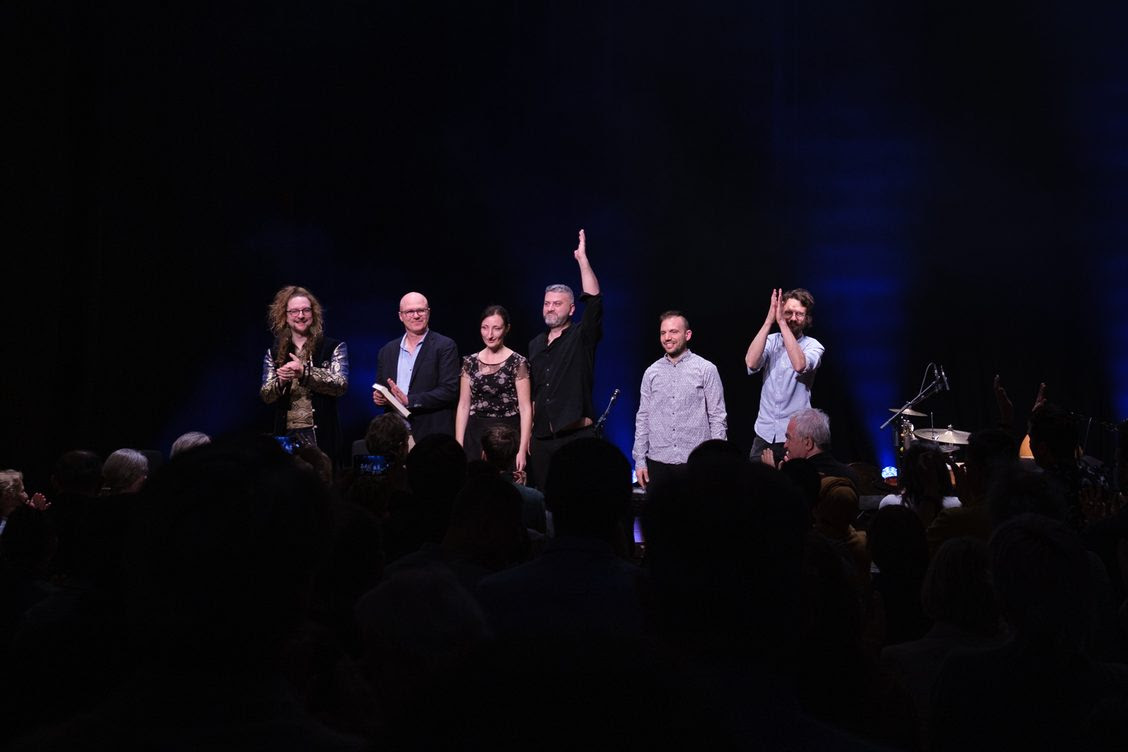
–You referred to it before. Personally, I think that you have definitely managed to create an unmistakable sound that defines you, and Ivana Đurić, Nenad Kovačić and Ivan Mihajlović have undoubtedly helped in this. Do you think you have found the ideal companions that best help you express your art?
-Well, Ivana, Nenad and Ivan we are like a family. When I don’t see them, I miss them. We’ve been working on some albums and many tours together, and right now I play with them, in trio with Derya Türkan and Žiga Golob and on other projects. I try to do both: constantly play with people I love and try to dream together, but I also try to do new things with other people. Nenad is playing in many bands and many projects. Ivana, as well. Ivan is working in the studio with so many different people. So when we get together, it’s never the same, but we have something that binds us. I’m the one who brings the material that starts from me, but I really am interested in their input and how they see things. And they’re different. Ivana is the closest to a traditional Sevdah collaborator I have, but she’s also dreaming new things when she does, and I constantly try to push her to do whatever she feels like. And sometimes we just don’t have any agreement on what we should do. We just start playing, and something happens. Because I think it’s really important in any artistic process, to combine the intellectual decisions with something that just happens from the senses without any negotiations or any talking. It’s good not to let ideas kill performance, or vice versa. And that is also my way of dealing with producers. First with Chris Eckman, then Joe Boyd, and then Andrea Goertler to give us new perspectives. And of course, working with other people like this brilliant double bass player Greg Cohen from America, then another great, great Slovenian double bass player, Žiga Golob, and a master of Turkish music, Derya Türkan. You know, when we were arranging Singer of Tales, I had zero problems putting Derya and Ivana together. I was afraid, maybe I should arrange some stuff. And then I was like, let’s just try to see how they sound together without arranging anything. And that was the best. In the first rehearsal, when they two started playing the same melody, him with his Ottoman, Turkish, Istanbul approach, and her with her Bosnian, Balkan approach, it just came together brilliantly because a lot of the roots of these two approaches are the same, but historical circumstances are different.
–You have become the indisputable referent of the freest Sevdah.
-I like «freest Sevdah». Let’s stop calling it «New Sevdah» and call it «Freest Sevdah»! I love «freest Sevdah»!
–You have fought many obstacles and have trusted yourself. I imagine that the road has been hard, but you have earned international respect. Has it been worth so much effort, to go against the current?
-Well, a good thing is that at the time when I started, people were interested in World Music, and people were interested in Sevdah. But in a really particular way, through bands like Mostar Sevdah Reunion and also Amira Medunjanin‘s first record. And what Dertum and Farah sang in the 90s were also trying to do this mixture of Balkan, Sevdah, Macedonian songs, South Serbian songs, and try to make a fun concert, try to make people dance, and stuff like that. But for me, I think the most important thing from my beginning, I don’t think it was even in arranging or singing stuff. It was in, at least I see it, in the change of production setting. I tried to have people sit and listen to these songs. I have nothing against parties, and I consider myself quite a party lover!, I’m not against that. It’s just that this is not what I do. I try to tell some stories in a new and different ways, and they require people’s attention. And, for some crazy reason, it was successful from the onset. I’ve been living solely for my concerts since 2005. And in the last seven or eight years, I’ve gaining more and more international success. Even in Sarajevo, when I started, I always had full concerts, successful tours, and stuff like that. But what really took a long time was for people to start seeing that as something valuable. This approach, the way I do it. And I think it made it possible for some other projects that came later to open this production space for them to do some other things. And everybody did it differently, of course. Some people criticized this whole scene of Sevdah, like Mostar Sevdah Reunion, Amira, me, Divanhana, younger performers like Zanin [Berbić] and Jusuf [Brkić], older performers like Ćamil [Metiljević] and stuff. They would love us to all have the same style. Radio Sarajevo created one particular style with accordion, tamburica, and stuff like that. But I think it’s impossible now because, first of all, Radio Sarajevo‘s style came out of the politics of one institution. So they all had the same vocal coaches, arrangers, sound engineers, and labels they worked with. And if you listen to Zaim‘s records, to Safet‘s records, Nada Mamula‘s records, they all sound the same because they were recorded by the same orchestra. Today, we don’t have strong institutions that push for one particular style. And that’s why we have so many different… And you know, the way music is being produced today is completely different. You don’t need, I don’t know, 200,000 euros to produce a record like you would need in the 1970s or 1980s. Today, you can do it with a mic and a computer, and if you have a person who knows how to record you. So it’s normal that it’s different. So what was the question again? Sorry! [Laughs].
–I don’t know if it has been worth too much effort…
-Yes, yes. I think it was worth it because I can do different things. I don’t need to do duets with pop and folk stars in order for people to pay attention to me. Usually people think that there is one way of producing, one way of doing things, and you are either successful by getting involved in that or you’re not. And probably if I had started doing Sevdah like «cafe society» musicians do, and playing weddings and stuff like that, and trying to do as many fast songs as I can to make people dance, maybe I would make more money, but I was never that greedy for the money. I mean, I’m earning enough, and I don’t need some big stadiums. It gives me freedom. Because I met so many of my friends musicians who had some hit songs early on, and everybody expected them to do more of that, to do only that. And I was surprised. The first big song that I had was actually six and a half minutes long, and it was one repetitive melody that I wrote to the old traditional ‘Dva se draga’, that ended the Sevdah film [Marina Andree Škop, 2010] and appeared on my Abrašević Live[Selfreleased, 2008] album. I did that tune just because I loved the lyrics and because it also had this gender ambiguous thing. And I wrote the melody to it, I recorded it, and I expected nothing from that. And even to this day, I have people asking me about that song. And so many people who paid attention to me told me afterwards that they paid attention because of that song. So I think these things are so unexpected sometimes. But I love it. I love it that one of my early successful songs was completely unorthodox: solo with the guitar, repetitive melody for like six and a half or seven minutes, telling an old story in an old way. So it’s cool.
–Tell me about your plans. Obviously, you are immersed in the presentation of this latest album, and your schedule is complete. You recently toured Great Britain, now you have more concerts in the region and in the rest of Europe… But I think you’re also working on a new book about saz…
-Since my last record just came out, like less than two months ago, and we have performances, touring, and everything, at this particular moment I have some ideas for recording some new stuff, but they are still maturing, so I have to see. But I was doing other things. I produced two interesting albums. I produced a spoken word album for a friend of mine, a poet, Ahmed Burić, it’s called Sin Pustinje or Son of a Desert. It was released by Dallas, a Croatian label. We played Sarajevo, and we’re going to play Novo Mesto, Ljubljana, Zagreb, and many other cities. We played Copenhagen with it. We have Toni Kitanovski there, and even Ivan Mihajlović on bass. We have also some guests. So it’s a really interesting project where I’m basically just a guitarist and a producer. And it’s so liberating to do something completely different on stage. And then I’m also producing a pop album by a wonderful young singer from Sarajevo, Esma Numanović. I really expect a lot from her. For me, it was so liberating to work on two completely different musical projects, different from what I do and then different from each other. And I really believe in Esma and her singing and her songs and everything, and I’m really happy to take part in that. Also on another front, so to speak, for a long time I’ve been finishing this book on saz tradition in Bosnia and particularly in Sarajevo region, because I think some very important things historically happened there for the not only musical tradition but also political cultural traditions of these regions, and I hope for this book to come out in the spring of next year, 2024. It’s an enjoyment, but it’s so much work, and it’s really hard to find time between concerts and tours to do that, but I’m persistent.
–It is not your first book. Would you like it…?
-I have no ambition as a writer. But with my writing on music, I try to fill in the holes that I feel are really needed. Like in 2016, when I published Sevdah, the history of Sevdah, I really, I just, so many people asked me about the history of Sevdah, how it developed, what were the influences, blah, blah, blah, and I just realized that I don’t have one book, I don’t have one article to send them. Because people usually write articles or books on oral poetry, tambura music, an accordion or radio, or stuff like that. Or some traditional singing and transcriptions of melodies. Or scales and stuff like that. But I was thinking: «Well, that’s all bits and pieces that are really detailed and they are academically important in terms of scientific research, but in terms of general audiences… ». And I read some great books about rebetiko or flamenco or blues or whatever that were not written by ethnomusicology or musicology professors but by journalists, people like that, who just try to say: «Okay, how can I explain this music historically without killing people with theoretical analysis that is not always good and important?». And that’s why I did it. I just tried to fill in one part of the puzzle that was missing. So, and I think as an artist who is also doing a lot of research, I’m in a good position to combine these worlds, because I think I have a sense for what general audiences need, not only in Bosnia but throughout the world, but also because I think I have quite enough experience already in research that I can present some really interesting stuff.
Discography:
–Damir Imamović Trio: Svira Standarde/Plays standards (Buybook, 2006)
–Damir Imamović Trio: Abrašević Live (Selfreleased, 2008)
–Solo: Damir Imamović (Gramofon, 2010)
–Solo: Svrzina Kuća (iTM, 2011)
–Damir Imamović Sevdah Takht: Sevdah Takht (iTM, 2012)
–Damir Imamović Sevdah Takht: Dvojka (Glitterbeat Records, 2016)
–With Ivana Đurić, Greg Cohen and Derya Türkan: Singer of Tales (Wrasse Records, 2020)
–With Ivana Đurić, Nenad Kovačić, Ivan Mihajlović and Mustafa Šantić: The World And All That It Holds(Smithsonian Folkways Recordings, 2023)
——————————————

Sevdalinkas: 150 joyas del Sevdah, por César Campoy
 sevda linkas