
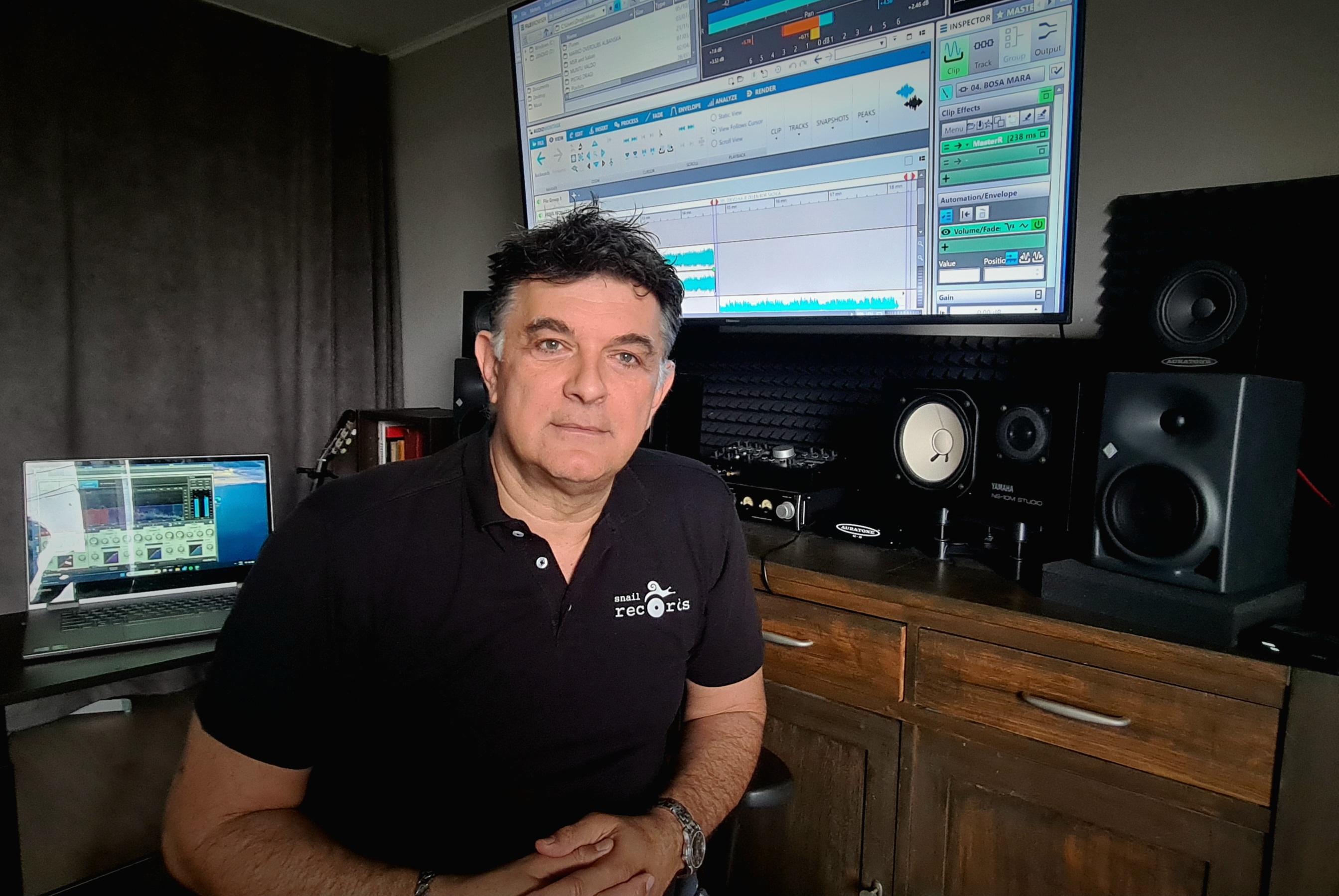
Dragi Šestić: «After 25 years, I would say we have earned the right to do whatever we please»
For a quarter of a century, Mostar Sevdah Reunion has been touring the four corners of the planet. This group is a pioneer in opening up the sounds of Sevdah and the entire universe of the sound tradition of the territories that made up Yugoslavia to the World Music scene. In all this time, these tireless lovers of well-understood risk, always keeping their roots in mind, have fused their own essence with varied rhythms such as swing, blues, rock and jazz. In addition, first-rate voices such as Esma Redžepova, Šaban Bajramović, Ljiljana Buttler, Ilijaz Delić, Amira Medunjanin and Milutin Sretenović Sreta have passed through their ranks. With their new album, Bosa Mara (Snail Records), they indulge in continuing to recover and rejuvenate classics from the region, but they also celebrate their birthday with the collaboration of Cameroonian Muntu Valdo and flamenco master Pedro El Granaíno. We chat with their leader and producer, Dragi Šestić, about all this and much more.
«During the war, we promised that the whole world would know about sevdalinka and Sevdah —and look at it now!»
«Success comes from a combination of great and creative musicians, a fantastic vocalist, and a band that is willing to step out of its comfort zone»
«It is crucial that public administration plays a key role in promoting sevdalinka in the future»
By César Campoy.
– To start, I would like you to look back and remember how this adventure of Mostar Sevdah Reunion began. How do you assess these 25 years of career? What do you remember as the best and most difficult moments that the band has experienced?
– I think we have accomplished a lot. We emerged from a destroyed country —rising from the ashes like a phoenix. We started this project purely out of love for our music, sevdalinka, our hometown Mostar, and our country, Bosnia and Herzegovina. We were singing in a language that was unfamiliar to many, playing unknown melodies from an unknown tradition. Through our musical arrangements, we aimed to build a bridge to a wider audience around the world. During the war, we promised that the whole world would know about sevdalinka and Sevdah —and look at it now! Almost 30 years later, sevdalinka has been recognized as part of UNESCO’s cultural heritage. We paved the way for a new generation of sevdalinka performers, who are now touring all over the world. These achievements make me a very happy man. Even though we faced difficulties and struggles over the past 25 years —especially in 2007 when the lineup changed significantly, and I thought it might be the end of our journey —we overcame the transition and became even stronger. Last year, we won the Songlines Music Award for Best Group. What more can I say?
– MSR is like a child that you gave birth to and with whom you have lived and cared for all these years. What has been your relationship with him throughout all this time? Have you managed to establish a relationship with him as if he were a living organism?
– Yes. Mostar Sevdah Reunion is like my child. And as its father, I know exactly how difficult and responsible a job it is to raise a child. You have to be extremely careful in the process of shaping its life. It brings you happiness and joy, but it also makes you tired, angry, and sometimes even depressed. There are moments when you think about giving up —but you can’t give up on your baby. Then you try even harder, and when you see it succeed, the joy you feel makes all the effort worthwhile.
– Does it represent a special responsibility for you to be considered the first group that opened Sevdah to the universe of World Music? Are you aware of the importance that MSR has played and plays in the international diffusion of music from the region?
– Yes, absolutely. With every new CD, I try to bring something new and fresh. We also include an introductory text with each album to explain our point of view —why we chose certain songs, what the goal of the album was, and so on.
Sometimes, based on my personal experience, there are people who would be happy to see us fail —something I simply don’t understand. Perhaps they cannot accept the fact that we have achieved international recognition. They are always trying to find flaws in our songs or in the overall concept of our albums. But after 25 years, I would say we have earned the right to do whatever we please.
Let us have some fun too —just like we did with our latest album, Bosa Mara, where we collaborated with the Spanish flamenco master Pedro El Granaíno and the Cameroonian bluesman Muntu Valdo.
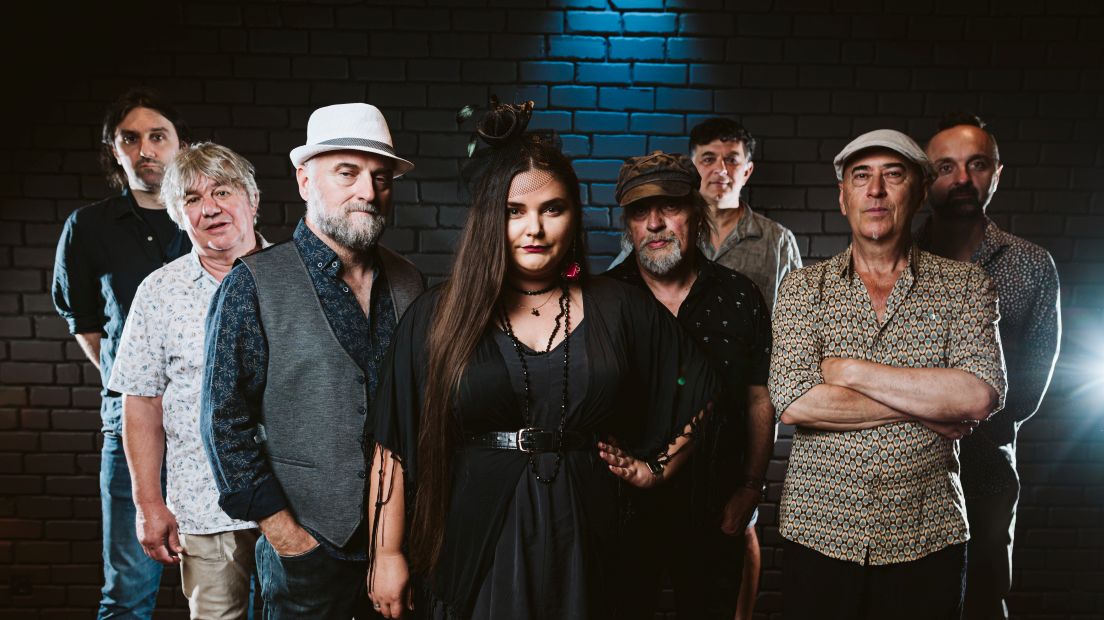
– Many singers and musicians have passed through MSR over the years, but there are some names that have always been present for almost all this time: Mišo Petrović, Sandi Duraković and Senad Trnovac. What is the relationship and routine like between all of you?
– Mišo, Sandi, and Seno have been with me from the very beginning. Mostar is a small town, so being from the same place means we have a relationship similar to that of family relatives. I am younger than them, so I look up to them as my older brothers. Of course, we argue a lot during recordings and concerts, but we also laugh, have fun, and share our pain, sadness, happiness, and problems —just like in a real family. We’ve been through many different periods —some tough, some great. Sometimes, we got tired of each other, but in the end, we always stick together.
– Let’s dive into this Bosa Mara. Tell us about the process of selecting the eleven songs. Why these songs?
– As I said, we wanted to create something unusual for Mostar Sevdah Reunion —something even a bit wild. We entered the studio at the Pavarotti Music Center in Mostar (our usual studio) with a few songs in mind, planning to record them and think of others in the meantime.
As the recording progressed, new ideas started popping up. All I knew was that we had to do something beyond our usual way of thinking.
– This is an album that is practically flawless. Very direct. Very beautiful. It reaches the listener very well. After 25 years, what is the secret of adapting classical pieces for the general public, and not having the feeling that you are repeating yourself?
– Thank you very much for your compliment. What is the secret? Hmmm… That’s a difficult question, and for me, it’s hard to give the right answer. From my point of view, I can say that success comes from a combination of great and creative musicians, a fantastic vocalist, and a band that is willing to step out of its comfort zone —to experiment and try something new.
Our recording sessions are based on a workshop system. Once a song is selected, we begin working on it. Mišo is primarily responsible for the harmonic arrangements, and depending on the song’s mood, I (or we) start selecting the right instruments to create the desired atmosphere. Sometimes, we record different solos on separate tracks, and during the mixing process, I find myself struggling to choose which one fits best. Some of my colleagues say I’m crazy to work this way because it can take 12 to 18 months just to complete the mix. Sometimes, I get lost in the process because these guys play so well that I wish I could create multiple versions of the same song (hahaha…).
So, it’s a kind of controlled chaos —something quite typical for the Balkans— hahaha…

– Let’s talk about the stellar collaborations on the album. How did the participation of the Cameroonian Muntu Valdo come about with that fantastic E Titi Lambo? In addition, we see Antonija’s most bluesy version there.
– Muntu Valdo is an old friend of mine, and 20 years ago, I almost released his album, but it didn’t happen. I love his work —he is a great artist and a wonderful person. He is the father of Sawa blues, a Cameroonian style of blues.
I have loved his song E Titi Lambo for a long time and wanted to record it with MSR for several years. However, the right moment or the right album concept never came along —until now. The song fits perfectly with the timing of our 25th anniversary album, where we decided to be completely free in our song selection. And Antonija‘s background is also in rock and blues, so that was a natural environment for her.
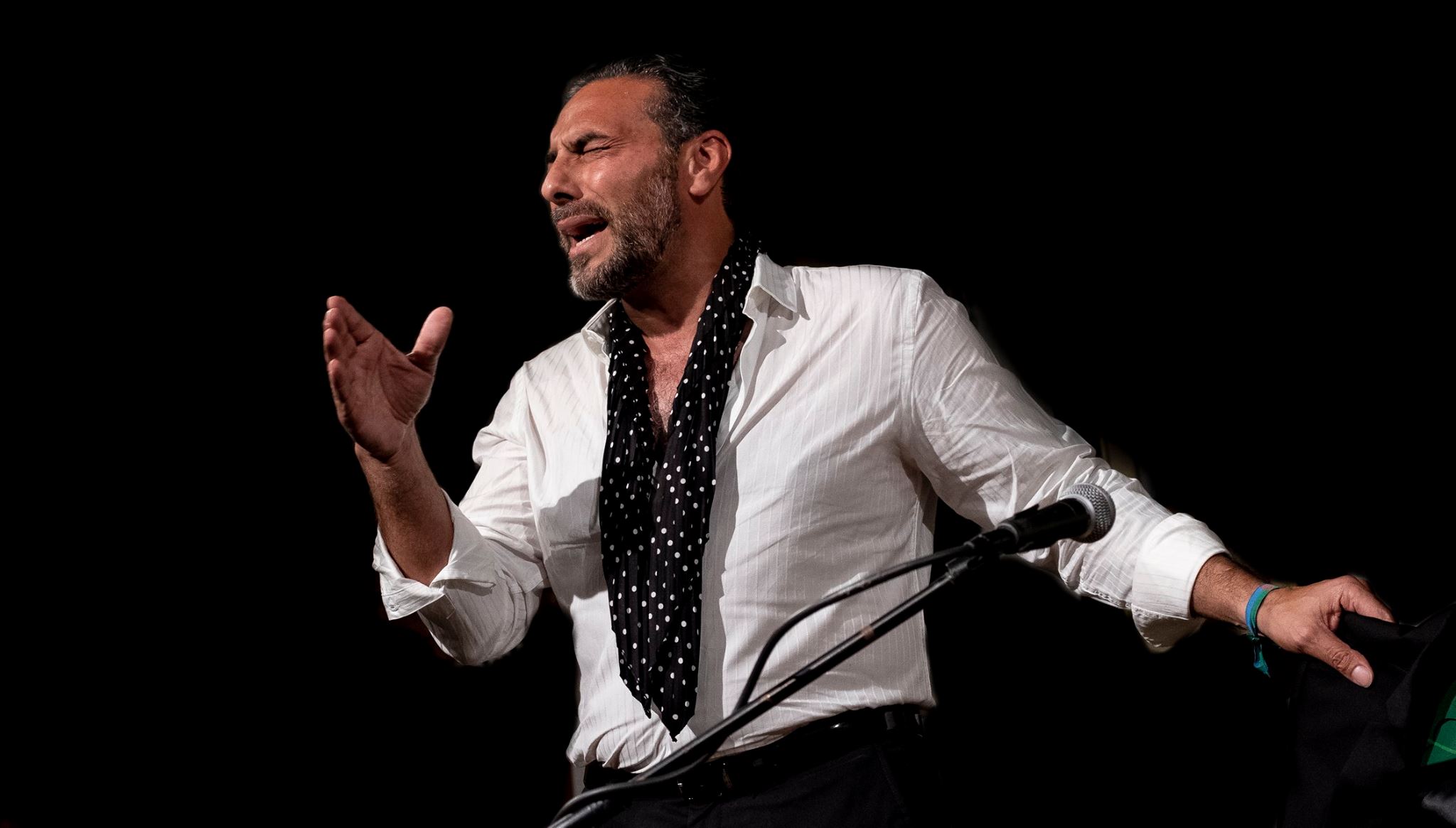
– Chaje Shukarije is a song well known to lovers of Balkan music, but here it takes on another dimension with the spectacular quejío by Pedro El Granaíno. It’s a version that breaks with everything, don’t you think?
– Yes, it is! And Pedro was just fantastic. This version of the song had been performed by Mišo and Sandi as a duet for ages —so the foundation of the song, including the harmony, tempo, and that furious atmosphere, was already predetermined.
We recorded a version with Antonija, and then it occurred to me that the song would be perfect for a flamenco singer. Your readers should know that I asked you to help me find someone who could fit with Mostar Sevdah Reunion. It was a long process, as you know. You sent me a great selection of flamenco singers, and after narrowing it down to a few, Pedro was the chosen one —definitely the right choice.
After that, you played a crucial role as a translator and negotiator, so a lot of credit for making this beautiful song a reality goes to you!
– Miguel El Cheyenne also takes part with the clapping and the cajón. Was it clear to you from the beginning that this version had to have a flamenco and rumba spirit?
– After we recorded song it was obvious that song has that rumba-flamenco spirit. Miguel did his part wonderfully. Pedro was actually recorded in his own studio, and then he added handclaps, cajón, and some conga parts (we had already recorded some congas ourselves). He sent me the tracks and said, «Hey Dragi, I recorded these tracks —feel free to use them if you like». And my goodness —yes, I loved them! His contribution was such a great touch and a perfect fit for the song.
– Does this mean that a path is opening up for MSR to continue including collaborations with
international artists on their albums?
– For sure. We are looking forward to working on some international projects. I really like the idea of fusion between different music styles. We’ve been doing it all these years. But yes, it would be a dream to make one album with Pedro singing Roma standards!
– In addition to these collaborations, I personally believe that there are several magical moments on this album. Without disparaging the rest of the songs, I would like us to stop at some of them. First of all, Zatvorena kapija, turned into an opening with an addictive rhythm. It seems to me an adaptation that becomes a totally new, unreleased song?
– Thank you for noticing that the song is really special. I first came across it through Agona Shporta, a young Albanian singer. I was involved with her as a mentor in the MOST project from Hangvető. I was helping her with the production of her album when this song came up —originally sung by the famous Nexhmije Pagarusha.
I got hooked on the song right away; I could hear the beat in it. I found the lyrics in Albanian and used Google Translate to get the meaning in English. Then I tried to craft a story and lyrics for the new version of the song, but I got stuck on a few lines. After consulting with a few friends in the field of poetry, I was still stuck, and then Antonija came up with the perfect solution that worked perfectly.
– U Trebinju gradu is one of the jewels of Bosa Mara. We are talking about one of the most beautiful treasures in the history of Sevdah. Himzo Polovina‘s version is a true work of art, and you have to be very brave to face it. Your adaptation is tremendously beautiful, and both the choirs and that successful combination of minor and major chords are very effective. A separate mention, the modulation of Antonija’s voice is perfect. How did you approach this adaptation? Was there fear and respect to face it?
– All the credit goes to Mišo Petrović. He brought that song to us during the recording. It was just the perfect timing and mood for it. He had played it for us a few times in the past, and it is such a beautiful song —a pure diamond of sevdalinkas.
Mišo is so artistic, it’s unbelievable. He hears all those tiny chords, notes, and details. Sometimes, he drives me crazy with his precision and comments about the details that ordinary listeners (and even I) don’t notice. But he is unique in his approach to music. He can create magic out of nothing!
And, of course, there is always a sense of fear and respect when you try to interpret something that was recorded by the great Dr. Himzo Polovina, arguably the best sevdalinka singer and interpreter —our greatest inspiration.
– With Devojka je zelen bor sadila, my question could go along the same lines. Another great Polovina classic. You maintain that original spirit so beautiful and magnificent. Also, again those voices that smell of the Croatian Adriatic, don’t you think?
– During the break, Mišo started playing the song, and Antonija began singing in the front hall of the studio, by the coffee table. The boys joined in and started singing —it was just a relaxing moment. Then I heard the magic and suggested we record it that way —simple, with an untuned choir that sounded like a bluegrass band with a Mediterranean feel.
That’s the advantage of using the workshop method during recording sessions. It’s hectic, but as a producer, you’re painting the picture of the whole album. After recording something as furious and upbeat as Chaje Shukarije, you feel it’s time to calm down the atmosphere on the album.
– How fresh Zvijezda tjera mjeseca sounds! I have the feeling that it is a very grateful song to be adapted. A sweet candy for any producer. Is that so?
– Actually, we’ve been performing that song live for years. A couple of years ago, we released the video/single with our dear and late Milutin Sretenović Sreta. That was the easiest one to record —we’d call it a ‘plug and play’ situation. Mišomade this dancing arrangement.

– Bosa Mara Bosnu pregazila is in the same vein. How did you think that these country tunes would suit it so well?
– That one came together in a similar way to U Trebinju and Djevojka je zelen bor sadila —it started as a suggestion. Mišo,Ivan, and Sandi began playing around in the live room of the studio, and Antonija joined them. Then I heard it —because Mišo started adding country harmonies as a real bluegrass version. I told them to keep it that way and to record it truly live —using three microphones for the violin, lead guitar, and rhythm guitar. They were standing in a circle and playing.
I recorded it, but Mišo and Vanja (Ivan) went totally crazy with the improvisation. They were having a Q&A with their instruments, and Sandi was like a sewing machine in between, keeping the rhythm. We ended up with almost an 8-minute version —hahahaha! Later, Marco overdubbed the double bass.
I thought, «Okay, let’s move forward and see later what I can cut out during the mixdown». My God! That was a hell of a job! I forgot I had a microphone leakage between instruments, so that surgical operation was driving me crazy. I had so much work to do during the mixdown to make everything sound natural. Uh, I still get nightmares from editing Bosa Mara Bosnu pregazila —hahahaha! But in the end, it’s the result that counts! I think it sounds very original and good, like a real bluegrass band.
– Mesem chori is another surprise. A Roma spirit with lyrics by Dragan Ristić and music by Mišo. How did this song come about?
– Mišo wrote that song a long time ago for Ljiljana Buttler, but he didn’t have real lyrics, so the song ended up in the drawer. During the recording session, I suggested recording the song with improvised lyrics, with the idea to add the proper lyrics later and record the vocals. I asked Dragan Ristić from the KAL band for help, and he wrote the lyrics in the Roma language, staying true to Mišo’s original idea. I think the song fits very nicely within the concept of the whole album —it brings diversity and refreshment to the overall picture of the album.
– The album closes with another gem. Dej mi, Bože, joči sokolove, a treasure of Croatian culture. I remember, above all, the interpretation of Ana Kelin and, more recently, of Afion. I think it was a great success on your part to have selected this song. Also, Antonija is unbeatable again. Why did you select this piece?
– Antonija came up to me and said she would like to record that song. I didn’t know it, but after a few minutes of her singing, it was a very simple decision —«Let’s record it!» As you said, her vocal is unbeatable. I think it’s a nice ending to the album —it opens the door for the next one.
– I imagine that the next few months will be full of activities to promote this Bosa Mara and to celebrate the 25 years of life of MSR. What is your agenda planned?
– We’ve already been quite busy. We just had two big concerts on December 30th and 31st in Mostar and Bihać —New Year celebration concerts on the open stage. At the end of February and in March, we have a few gigs in Sweden and Switzerland. In April, we have a tour in Croatia and Slovenia, and summer festival offers are coming in. We also expect the album to appear on world music charts, with reviews, etc.
– By the way, we cannot end this discussion without talking about the inclusion of sevdalinka in the UNESCO List of Intangible Cultural Heritage of Humanity. An achievement for which you have fought so hard. What does this represent for Sevdah in particular, and for the culture of Bosnia-Herzegovina and the region in general?
– It fills me with pride that sevdalinka has been recognized as UNESCO‘s cultural heritage. This is a monumental achievement not only for the music world but also for the culture of Bosnia and Herzegovina. Mostar Sevdah Reunion is honored to be part of this process, promoting sevdalinka and Sevdah worldwide. This recognition reinforces the importance of our mission, and as we continue our work, it makes our contribution even more significant in preserving and sharing this unique musical tradition that is an integral part of our cultural identity.
– This invites public administrations to support the diffusion of Sevdah in a constant and effective way, don’t you think?
– It is crucial that public administration plays a key role in promoting sevdalinka in the future. The government should initiate special projects and programs to preserve, celebrate, and share this musical treasure. Investing in cultural promotion and creating platforms for sevdalinka to reach wider audiences will ensure its legacy and influence for generations to come. Our mission is gaining more significance, and it’s time for public institutions to support and nurture this unique part of our cultural identity.
Lee esta entrevista en español
——————————————

Sevdalinkas: 150 joyas del Sevdah, por César Campoy
 sevda linkas